
Visitor trajectory
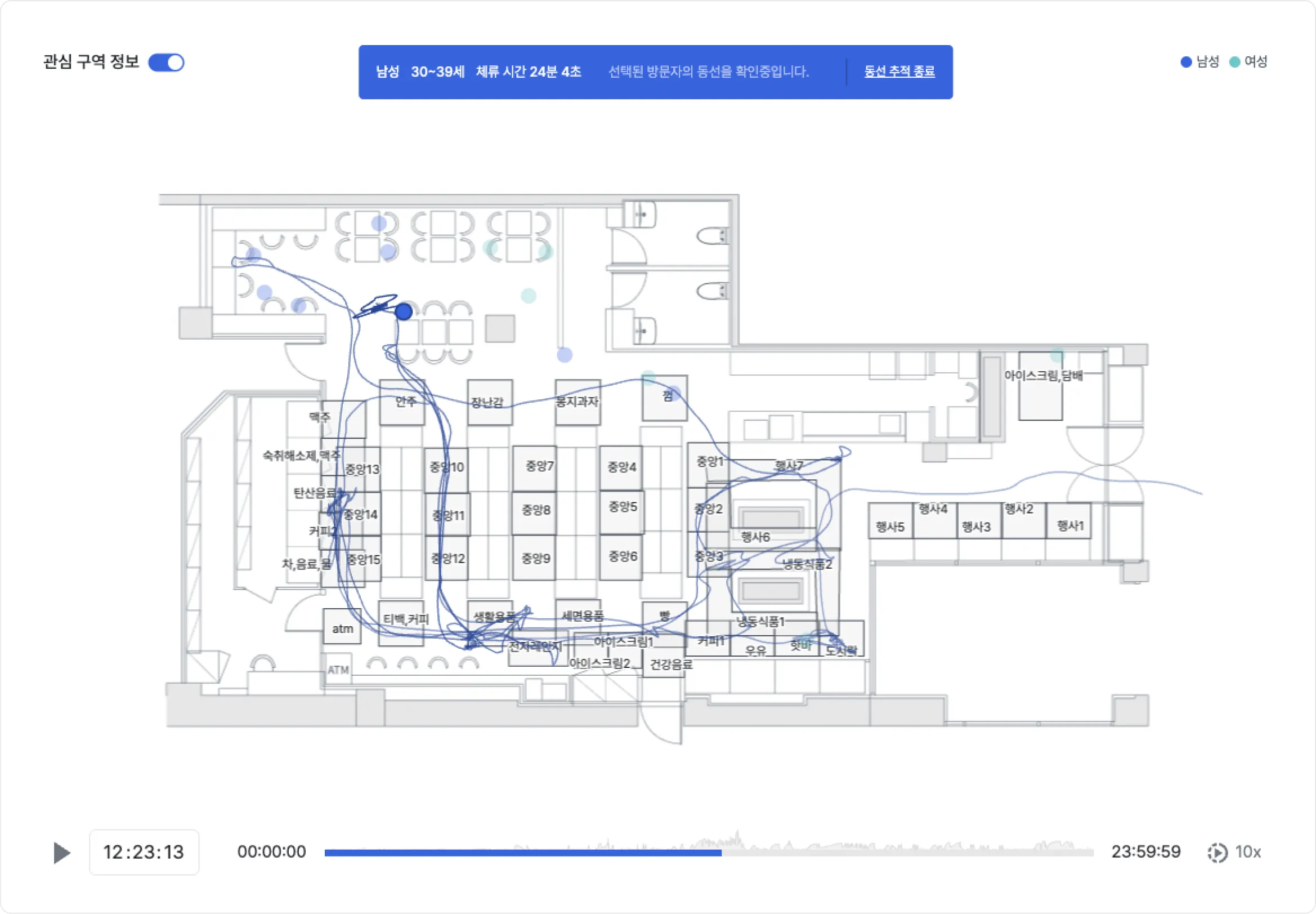
Visitor trajectory analysis visualizes each customer’s movement path and shows the order in which they moved.
It goes beyond “where they visited” and lets you understand the actual shopping flow and behavioral type of each customer.
Report layout
Detailed trajectory tracking
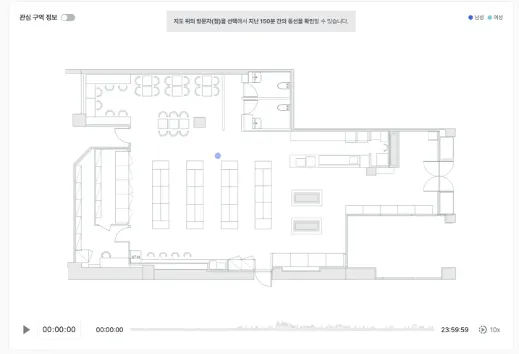
- Select one of the dots (a visitor) on the map to trace that customer’s trajectory and see detailed data including dwell time and age group.
- The customer’s detailed movement is drawn as a line for precise inspection.
Examples
- Conduct in-depth behavior analysis on long-stay customers or customers who leave quickly.
- Improve displays and signage in zones with heavy traffic but low conversion.



Use cases
In-depth customer-behavior diagnosis
- Use individual trajectory analysis to clearly identify the points where customers struggle while exploring merchandise.
- Qualitatively understand decision-making in long-stay or illogical trajectories and derive improvements.
Reduce shopping fatigue
- Find inefficient back-and-forth paths customers take while heading toward a destination, and improve the path flow.
- Shorten shopping time and deliver a comfortable, efficient shopping experience, raising satisfaction.
Refining marketing touchpoints
- Capture long-dwell trajectories or repeated movements around specific products to identify customers’ actual interests.
- Use these interests to refine the location and timing of message exposure.
Period comparison
- Compare trajectory changes before and after store renewals or VMD changes to validate strategy effectiveness.
- Check changes in visit flow to confirm whether new paths formed as intended.
Combine with other features
- Combine with the Zone Interest Analysis report.
- Confirm the performance (dwell time vs. purchase) in zones where customer trajectories stop or backtrack and improve.
Eliminate inefficient trajectories
- Use individual trajectory tracking to identify points where customers repeatedly travel back and forth or encounter confusion.
- Simplify displays and strengthen signage in those inefficient zones to improve the shopping experience.