

Segment Comparative
Segment Comparative is a strategic filter that goes beyond average customer behavior to precisely compare differences between groups.
It acts as the core filter for an advanced view that breaks Zone interest analysis results down by group. Use it for precision targeting, personalization, and operations focused on your highest-performing customer segments.
Report layout
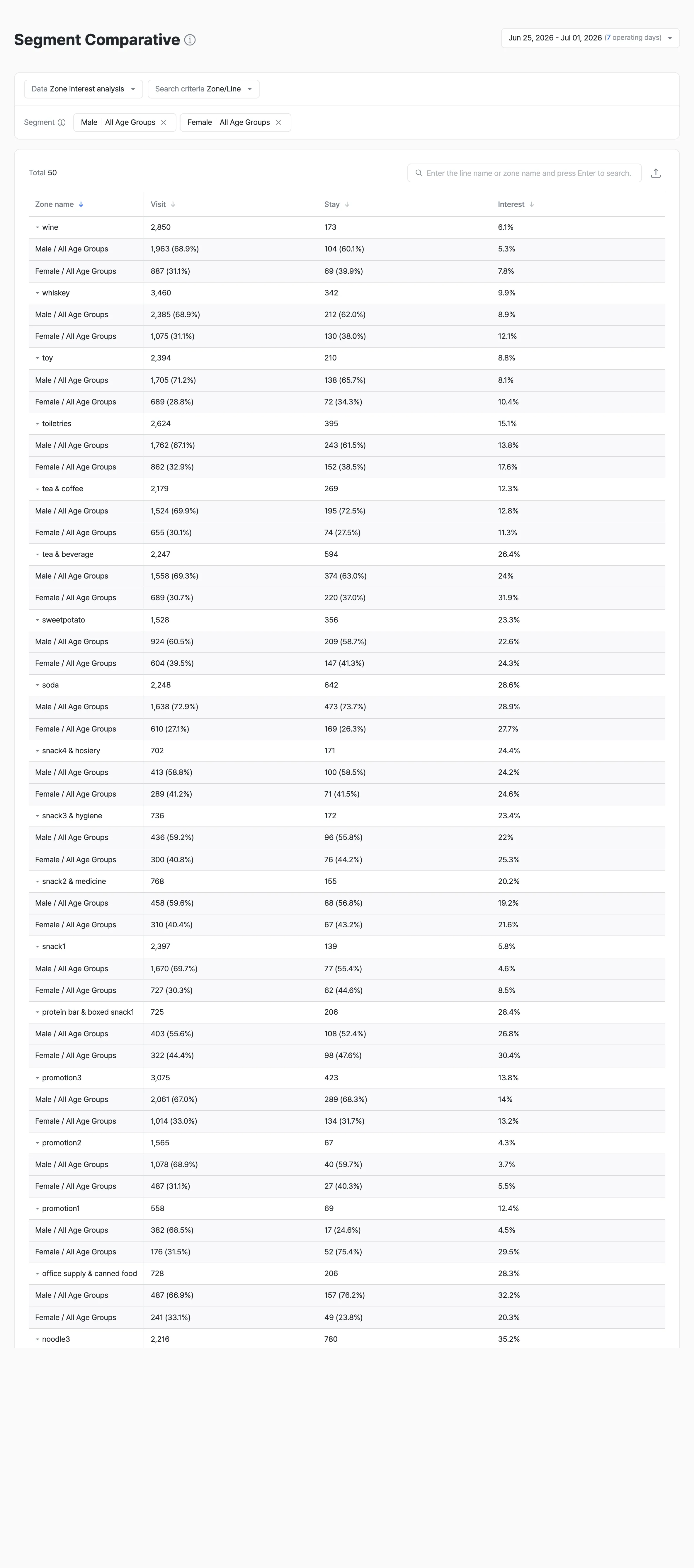
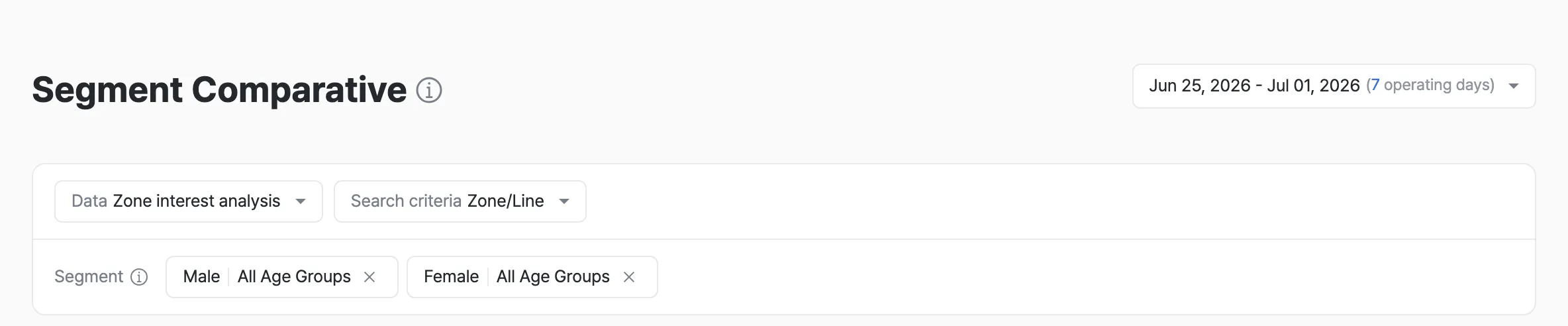
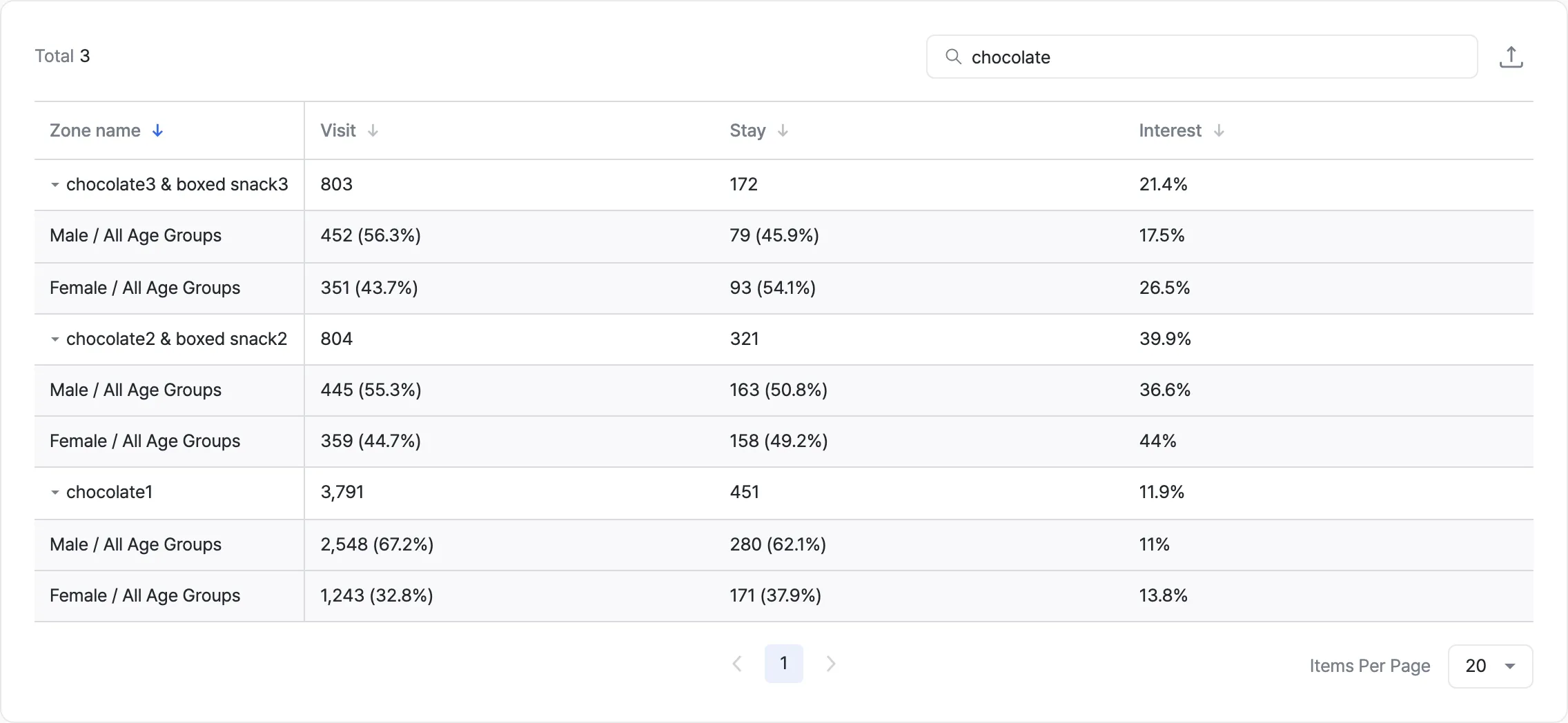
Visitor group definition
- Define visitor groups based on demographic information such as gender and age range.
- Captures the unique behavioral patterns of the demographic segments you choose.
- Example: Set your core target audience and extract their distinctive patterns.
Comparative Zone interest analysis
- Compare the configured segments to identify differences in core performance metrics — visits, Stays, interest — across groups.
- Examples:
- Identify a space that’s a Star Zone for women in their 20s but a Question Mark for men in their 40s, and craft differentiated strategies that match each target group’s preferences.
- Compare how much higher your core target group’s interest (Stays) is than non-target groups to quantitatively diagnose the marketing-targeting accuracy of that zone.
Use cases
Precision target marketing
- Deliver messages only to the “potentially responsive customers,” not the broader crowd, to maximize marketing-spend efficiency.
- Choose the most effective message and channel based on each group’s preferred zones and Bounce stages.
Operational efficiency and ROI
- Concentrate resources and staff on the Star Zones and Hidden Gems of your core target segments to maximize operational efficiency and ROI.
Personalization and experience improvement
- Analyze interest differences across groups to strengthen merchandising — for example, placing age-specific preferred products in tailored locations.
- Quantitatively confirm which visitor groups responded to a campaign, raising the precision of future strategy.
Advanced tips
Deep zone-interest comparison strategy
- After applying segment comparisons, analyze the relative position of visits and interest to diagnose each target group’s per-zone potential.
- Compare a single segment’s pre- and post-promotion zone interest to quantitatively validate the impact of your strategy.